
Ask a plant manager what keeps them up at night and cleaning rarely makes the list. Uptime does. Safety numbers do. An OSHA walkthrough does. Passing a customer audit does.
Here is the thing, though: facility cleanliness quietly sits underneath every one of those. Dust accumulation on equipment causes overheating. A slick spot on a warehouse floor becomes a recordable injury. A dusty, cluttered plant loses a contract during a client site visit. Cleaning is not a cosmetic line item in an industrial building — it is preventive maintenance and risk management wearing an unglamorous name.
PBC Professional Building Cleaning has serviced industrial facilities across Fort Collins, Greeley, Loveland, Windsor, Longmont and the Denver metro since 2017. This guide covers what industrial cleaning actually includes, how often each task genuinely needs doing, and what to look for when you put the contract out to bid.
Why industrial cleaning is a different discipline from office cleaning
An office is a predictable environment: carpet, desks, restrooms, a break room, foot traffic on a known schedule. An industrial building is not predictable at all, and the differences are what drive scope and price.
The soil is different. Instead of dust and food debris, you are dealing with oil and grease, metal filings, packaging fibers, pallet splinters, rubber residue from forklift tires, and process-specific dust. Each needs a different chemistry and a different method.
The vertical space is real. Offices stop at nine feet. A warehouse has racking, overhead structure, joists, ductwork, light fixtures and conduit at twenty-five feet or higher — and every one of those surfaces collects combustible dust over time.
Equipment is always moving. Forklifts, pallet jacks and reach trucks are operating while cleaning happens. That changes crew training, PPE, traffic-plan coordination and insurance requirements.
The stakes are regulatory. Slip-and-fall prevention, housekeeping standards, combustible dust management and aisle-clearance rules all sit inside OSHA’s general housekeeping expectations. Your cleaning program is part of your compliance posture, not separate from it.
What a complete industrial cleaning scope covers
Not every facility needs every item, but a proper scope is built from this menu rather than from a generic janitorial checklist.
Production and warehouse floors
- Auto-scrubbing of concrete, epoxy and sealed floors on a set route
- Degreasing in production zones, loading areas and near equipment
- Line-marking and aisle-stripe cleaning so safety markings stay visible
- Dock and dock-plate cleaning, where the worst grime concentrates
- Spot treatment of oil stains before they become permanent
High-level and structural cleaning
- Racking and shelving dusting, top to bottom
- Overhead beam, joist and conduit dusting
- Light fixture and lens cleaning, which measurably improves floor-level lighting
- Ductwork exterior, vents and diffusers
- Fan, louvre and exhaust housing cleaning
Support areas that shape how staff feel about the place
- Restrooms and locker rooms, cleaned and disinfected daily
- Break rooms, lunch areas and vending zones
- Offices, QA labs, conference and training rooms
- Entryways, stairwells and mezzanine walkways
- Interior and exterior glass, and office partitions
Periodic and specialty work
- Floor stripping, sealing and re-waxing on finished surfaces
- Commercial carpet extraction in office and admin areas
- Wall washing and high-touch-surface disinfection
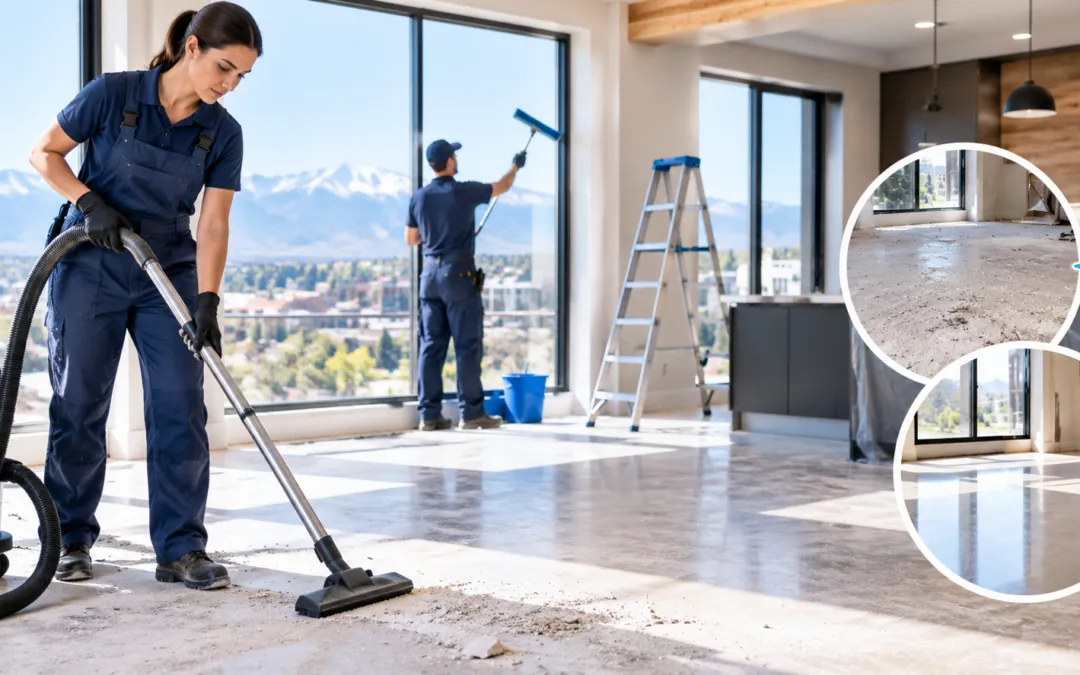
- Post-project cleanup after equipment installs or plant expansions
How often does each task really need doing?
The single biggest cost mistake we see is applying one frequency to the whole building. Different zones wear at completely different rates, and a well-built schedule reflects that.
Daily: restrooms, break rooms, entryways, office areas, trash removal and high-touch surfaces. These track directly to staff morale and absenteeism, and skipping them is a false economy.
Weekly to biweekly: warehouse floor scrubbing, dock cleaning, glass, stairwells and mezzanines. Frequency scales with forklift traffic and door count — a busy cross-dock needs more attention than a low-turn storage building.
Monthly to quarterly: racking dusting, light fixtures, vents, wall washing and detail work in production zones.
Semi-annually to annually: high-level structural dusting, floor stripping and re-sealing, deep carpet extraction, and a full top-to-bottom reset.
A practical way to sanity-check your own program: walk the building and ask which surfaces you would be embarrassed for a customer to run a finger along. Those are the ones your current frequency is not covering.
What drives the cost of an industrial cleaning contract
When quotes come back at wildly different numbers, it is almost always because the scopes were not truly comparable. These are the real cost drivers:
Square footage and floor type. Sealed concrete, epoxy, VCT and bare concrete each scrub at different speeds and need different equipment.
Ceiling height and access needs. Anything requiring a scissor lift or boom adds equipment cost, training requirements and time.
Shift schedule. Cleaning between shifts, overnight or on weekends costs more than daytime work, but it is often the only way to avoid disrupting production.
Regulatory and audit requirements. Facilities subject to food-safety, pharmaceutical or customer-specific audits need documented procedures and sign-off logs, and that documentation takes time to maintain properly.
Soil load. A metal fabrication shop and a dry-goods distribution centre have the same square footage and nothing else in common.
Supplies and consumables. Confirm whether paper goods, soap and liners are included or billed separately. This is the most common line-item discrepancy between competing bids.
The only reliable way to price this work is an on-site walk-through. Book one here and we will build the scope around your actual building rather than a template.
What to look for in an industrial cleaning partner
- Proof of insurance sized for industrial work. General liability and workers’ compensation, with certificates you can verify.
- Safety training you can inspect. Ask about lockout/tagout awareness, PPE policy, forklift-area protocols and chemical handling training.
- A named account manager. Industrial contracts fail on communication far more often than on effort. You want one person who knows your building.
- Documented scope with frequencies. Every task should have a stated frequency. Vague scopes cause every dispute that follows.
- Consistent crews. A team that returns week after week learns your building, spots problems early and needs less supervision.
- Local presence. When something goes wrong at 5 a.m., a Northern Colorado contractor can be on site. A national call centre cannot.
Why local facilities work with PBC
We are family-owned, locally operated and based in Fort Collins, and we have been cleaning demanding commercial environments here since 2017. Industrial plants sit alongside medical facilities, banks, car dealerships and apartment buildings in our portfolio, and that mix keeps our standards high across the board.
What our clients tell us they value most is boring, in the best possible way: crews that show up when they said they would, an account manager who answers the phone, and a scope that is actually delivered rather than quietly trimmed after month three. You can read their words in the testimonials on our home page, and learn more about how we work on our About Us page.
Frequently asked questions
Can you clean around our production schedule?
Yes. We regularly work overnight, between shifts and on weekends so that cleaning never interrupts output. Scheduling is set during the walk-through and adjusted as your production calendar changes.
Do you handle floor scrubbing, stripping and waxing?
Yes. Auto-scrubbing, degreasing, stripping, sealing and re-waxing are all in scope, along with commercial carpet cleaning for your office and admin areas.
Is your crew trained for an active warehouse environment?
Yes. Our teams are trained on PPE requirements, chemical handling and working safely around forklift traffic and operating equipment.
Do you offer one-time deep cleans as well as recurring contracts?
Both. Many facilities start with a one-time reset — a deep clean or post-installation cleanup — and then move onto a recurring schedule once they see the standard.
Which areas do you serve?
Fort Collins, Loveland, Greeley, Windsor, Timnath, Johnstown, Evans, Longmont, Berthoud and the Denver metro, plus Cheyenne, Wyoming.
Get a scope built around your facility
Every industrial building is different, and a generic quote will either overcharge you for work you do not need or leave gaps you will notice at the worst possible moment.
Schedule a free on-site walk-through or call 832-341-1994. We will walk your facility, ask about your audit and safety requirements, and give you a written scope with clear frequencies and a fixed price.